From Clutter to Cash: Your First Flea Market Profit
That dusty box in your attic? Those clothes you never wear? They could be your next paycheck. Flea markets are one of the few side hustles with almost zero startup cost — no website, no shipping, no waiting for payments. Just stuff, a folding table, and a Saturday morning.
Here’s the complete playbook, organized the way you’ll actually use it.
Before Market Day
Curate and clean your inventory
Walk through your home with one question: Would I buy this again today? Gently used clothing, kitchenware, tools, toys, books, and small furniture all move well. Then make everything look loved — wipe surfaces, polish silverware, pair orphaned items together. A little effort here multiplies your profits.
Scout and book the right market
Not all markets are the same. Visit a few on weekend mornings first and observe the crowd, the vendor mix, and the vibe. Some markets skew antique, others bargain-hunter, others food-and-produce. Once you find your fit, contact the organizer early — prime spots near entrances go fast. Expect to pay $10–40 for a space, which you’ll typically recover with your first few sales.
Price with haggling built in
This is where your profit is won or lost. Research similar items on resale apps, then price 10–20% lower for the instant-cash factor — and tag every single item. If shoppers have to ask, most walk away. Build a 10–15% cushion into every tag, because every flea market shopper will try to talk you down. Bargaining is part of the fun; price for it from the start.
Market Day
Your packing checklist:
- ✅ Plenty of small bills and coins for change
- ✅ Shopping bags (save grocery bags all year)
- ✅ Newspaper or bubble wrap for fragile items
- ✅ Clean tablecloths and simple display racks
- ✅ Water, snacks, sunscreen — you may not get a break
- ✅ A foldable chair
Arrive at least an hour before opening. Set up calmly, double-check that everything is priced, and count your change float.
Set up a booth that sells
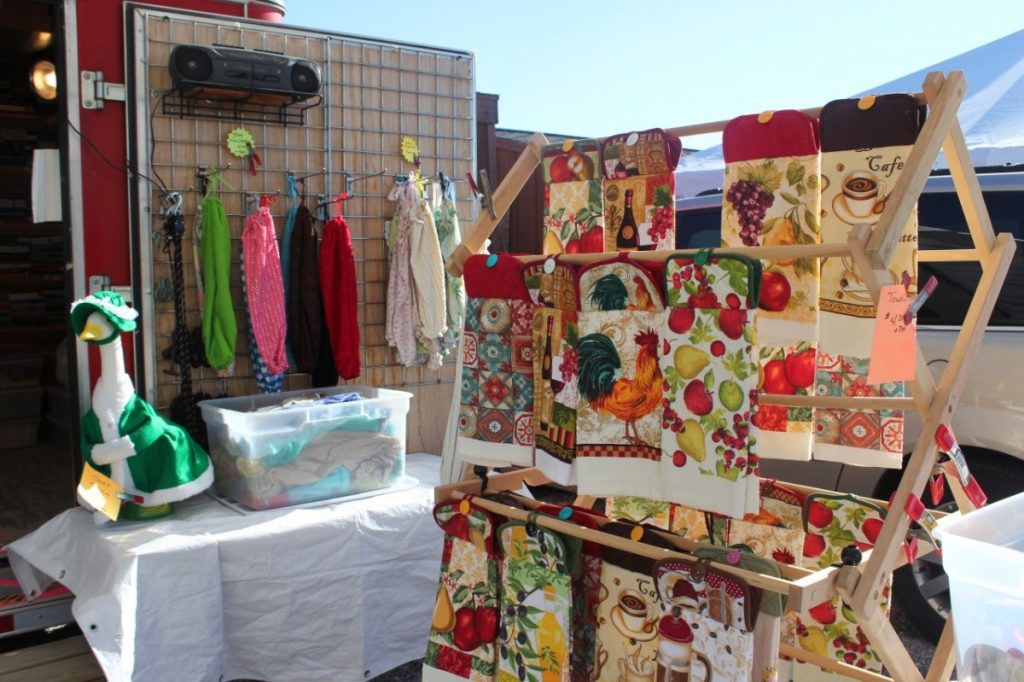
Cover tables with clean, neutral cloths so merchandise pops. Group similar items together, and use vertical space — hangers, crates, and risers draw the eye upward. Two rookie mistakes to avoid: burying items in boxes (shoppers won’t dig) and overcrowding the table (it reads as “junk” instead of “finds”).
Work the crowd and negotiate
Greet shoppers, stay off your phone, and rearrange your display every hour or so to keep it looking fresh. When someone makes an offer, don’t take it personally — it’s a game. Counter in the middle, smile, and if an offer is 50% off, hold firm: “I can do 20% off, but that’s my bottom line.” Remember: most of this stuff cost you nothing. A fair deal beats hauling it home.
After the Market
Liquidate what’s left
The final hour is golden time. Post a sign — “Everything 50% off” — and watch the remainder vanish. Whatever survives goes into a clean, labeled box, ready for your next market or a donation receipt.
Track what sold
Before you forget, jot down your three best sellers, your total take, and what didn’t move. A typical first-timer with good inventory clears $100–300 per market day after the booth fee — and each market gets better as your data sharpens. Repeat sellers quickly learn which items to hunt for at garage sales and thrift stores, turning a one-time purge into a real side income.
Mistakes First-Timers Make
- Bringing no small bills. Your first customer pays with a $20 for a $3 item — now you can’t make change for anyone else.
- Pricing at your minimum. No room to negotiate means either lost sales or lost profit.
- Packing up early. The best bargain hunters arrive in the last hour with cash in hand.
- Sitting and scrolling. An empty-looking, phone-absorbed vendor reads as unwelcoming.
- Bringing nothing to display on. Floors are for feet, not merchandise.
The Bottom Line
Your first market won’t make you rich, but it will teach you what sells, how to price, and how to read customers. Many side hustles — some full-time businesses — started with a single folding table. Clear the closets, load the car, and claim your spot.